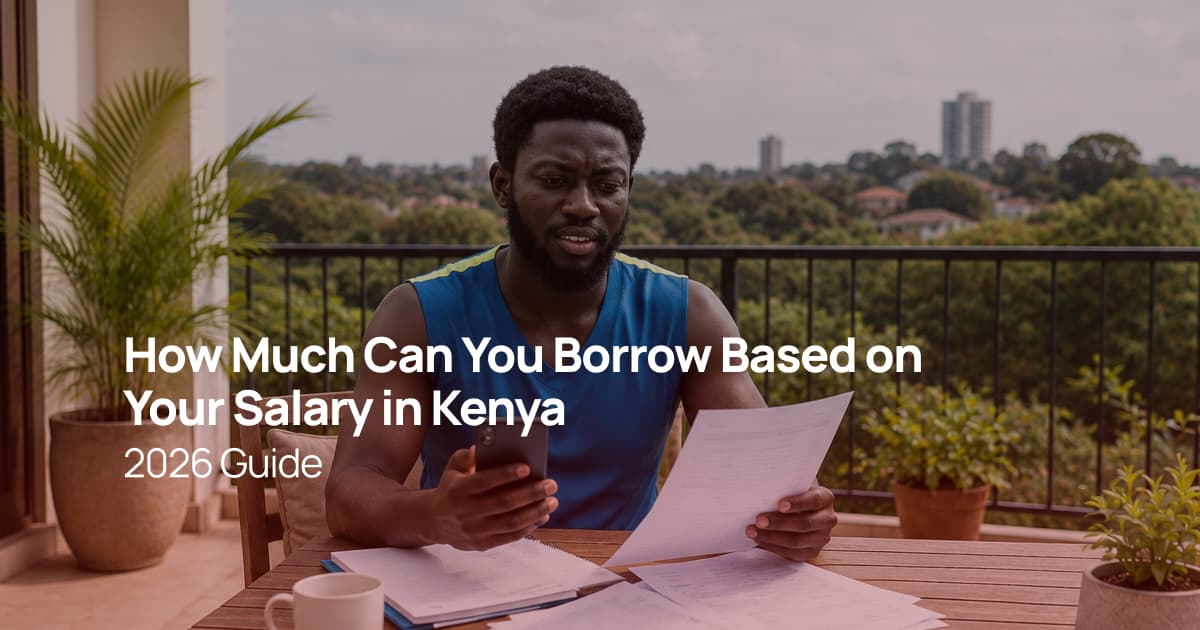
How Much Can You Borrow Based on Your Salary in Kenya?
Advertiser Disclosure: MoneyHello is an independent, advertising-supported comparison service. We may earn a referral fee if you click our links or use our matching tool to connect with a lender. This does not affect the content of our articles or the loan offers you receive.
Whether you’re applying for your first personal loan or simply exploring your options, one of the biggest questions is:
“How much can I actually borrow?”
Many people assume that lenders approve loans based only on how much they earn each month.
In reality, your salary is just one part of the picture.
Lenders also look at your existing financial commitments, your ability to repay the loan comfortably and their own lending criteria.
This guide explains how loan affordability works in Kenya, what factors may influence the amount you can borrow, and how to improve your chances of receiving an offer that fits your budget.
If you’re completely new to borrowing, start with our guide How Personal Loans Work in Kenya: A Beginner’s Guide, where we explain the loan application process, repayments and the basics of personal loans.
Does Your Salary Determine Your Loan Amount?
The short answer is yes, but not by itself. According to the Kenya National Bureau of Statistics (KNBS) report, mid-income sectors such as workers in education earn about Ksh94,610 per month.
Many lenders use your income as a starting point because it helps them estimate how much you may be able to repay each month.
However, two people earning the same salary may qualify for different loan amounts.
Why?
Because lenders often consider a combination of factors, including:
- Monthly income
- Existing loan repayments
- Regular household expenses
- Employment or source of income
- Credit history (where applicable)
- The lender’s affordability assessment
Rather than asking, “How much do you earn?” lenders also ask, “Can you comfortably afford another repayment?”
How Salary May Affect the Amount You Can Borrow
Every lender has its own lending criteria, so there is no fixed loan amount linked to a particular salary. The examples below are for illustration only and are not guarantees of approval or loan amounts.
| Monthly Salary | Example of How Lenders May Assess Your Application |
|---|---|
| KES 20 000 | You may qualify for a smaller loan if your monthly expenses are manageable and the repayments fit comfortably within your budget. |
| KES 40 000 | A higher income may increase your borrowing potential, provided your existing financial commitments remain affordable. |
| KES 60 000 | Depending on your affordability assessment and the lender’s criteria, you may qualify for a larger loan amount than someone on a lower income. |
Remember: Your salary is only one part of the decision. Lenders also consider your monthly expenses, existing loan repayments, affordability and their own lending policies before making an offer.
What Do Lenders Usually Look At?
Your monthly income
A stable and regular income generally makes it easier for lenders to assess affordability.
This may include:
- Employment income
- Business income
- Other regular sources of income accepted by the lender
Existing financial commitments
If you’re already repaying other loans or have significant monthly obligations, lenders may reduce the amount they’re willing to lend.
Your monthly expenses
Rent.
Transport.
School fees.
Utilities.
Family support.
These all affect how much disposable income remains each month.
Not sure how much people typically spend each month? Read our guide How Much Does It Really Cost to Live in Nairobi in 2026 to understand common household expenses and build a more realistic budget.
Credit history
Some lenders review your previous borrowing history as part of their assessment.
A positive repayment history may improve your chances, while missed repayments can affect future applications.
Example: How Affordability Works
Imagine two people who both earn KES 50 000 per month.
Applicant A
- Rent: KES 23 000
- Existing loan repayments: None
- Household expenses: Moderate
Applicant B
- Rent: KES 30 000
- Existing loan repayment: KES 8000
- Household expenses: Higher
Although both earn the same salary, Applicant A may be able to comfortably afford higher monthly repayments than Applicant B.
This example shows why salary alone doesn’t determine the loan amount. Before applying, it helps to know exactly where your money goes every month. Our guide How to Create a Monthly Budget That Actually Works in Kenya explains how to plan your income and expenses so you can better understand what repayment may fit your budget.
Should You Borrow the Maximum Amount?
Not always.
Just because you may qualify for a larger loan doesn’t necessarily mean you should take it.
Before borrowing, ask yourself:
- How much do I actually need?
- Will I comfortably afford the repayments?
- Is there a cheaper way to cover the expense?
- What happens if my income changes?
Borrowing only what you genuinely need usually makes repayments easier to manage.
How to Improve Your Chances of Receiving a Suitable Loan Offer
While every lender has different criteria, these habits may help:
- Apply for an amount you genuinely need.
- Provide accurate information.
- Make repayments on existing loans on time.
- Reduce unnecessary monthly expenses where possible.
- Compare different lenders instead of applying randomly.
Remember, no lender can guarantee approval. You may also be surprised by the everyday expenses that quietly reduce your borrowing affordability. Read 7 Things That Quietly Drain Your Salary Every Month in Kenya.
Why Comparing Lenders Matters
Different lenders have different lending criteria.
That means one lender may assess your application differently from another. You can also check the Central Bank of Kenya for information about licensed Digital Credit Providers and responsible borrowing.
Comparing options allows you to review:
- Available loan amounts
- Repayment periods
- Interest and applicable fees
- Total repayment amount
- Monthly repayments
Rather than focusing only on the maximum amount available, consider which repayment best fits your monthly budget.
How MoneyHello Can Help
Instead of visiting multiple lender websites individually, MoneyHello allows you to compare personal loan options in one place.
You can review important loan details, understand the total cost of borrowing and compare lenders before deciding which option best suits your financial situation.
Comparing first helps you make a more informed borrowing decision.
Final Thoughts
Your salary plays an important role when applying for a personal loan, but it isn’t the only factor.
Lenders also consider affordability, existing financial commitments and their own lending policies before making a decision.
Rather than asking, “What’s the biggest loan I can get?”, ask:
“What’s the right loan amount for my budget?”
Choosing a loan that comfortably fits your monthly finances is one of the best ways to borrow responsibly. Remember, the goal isn’t to borrow the biggest amount available, it’s to borrow an amount that comfortably fits your monthly budget.
Frequently Asked Questions
Can two people with the same salary qualify for different loan amounts?
Yes. Lenders may also consider existing financial commitments, affordability assessments and other factors, so two applicants with the same income may receive different offers.
Is a higher salary guaranteed to result in a larger loan?
No. A higher income may improve affordability, but lenders also consider expenses, current debts and their own lending criteria.
Can I apply if I have an existing loan?
Possibly. Some lenders consider applications from borrowers with existing loans, but the additional repayments must still be affordable based on their assessment.
Should I borrow the maximum amount I’m offered?
Not necessarily. Borrowing only what you need can make repayments easier to manage and reduce the overall cost of borrowing.
Will every lender offer the same amount?
Definitely not.